Stage one — log selection
The carver looks at a log and decides what it wants to become. A standing-dead white oak is the totem carver's wood; a fresh-cut white pine is the chain-carver's wood; a kiln-dried basswood blank is the hand-carver's wood.3 Time spent looking at the log is time saved in the carving.
Stage two — staging and chocking
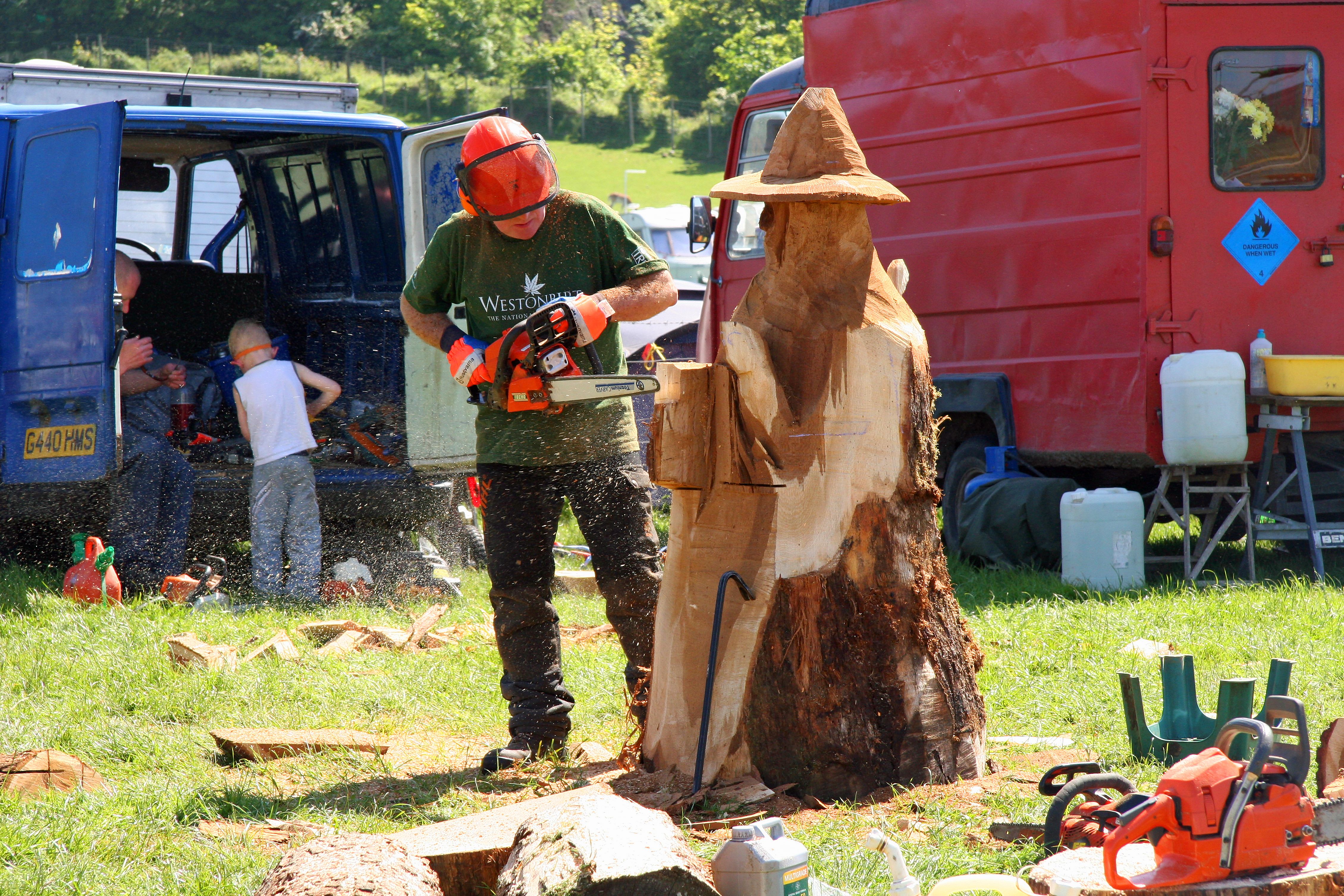
The log is set on a stable base — chainsaw horses, a log cradle, or a plywood sheet on the ground. The log is chocked so it cannot roll under the cut. Chain-carving is faster and more dangerous than hand carving; safety is the difference between a Saturday session and a hospital visit.
Stage three — rough-out (chainsaw)
The 24-inch bar saw takes the log down to the rough silhouette of the bear, eagle, or totem in about thirty minutes. The cut is read from above and from the side as the carver walks around the log; the rough-out is the most reversible stage, and the most expensive to do twice.
Stage four — mid-grade and detail (chainsaw)
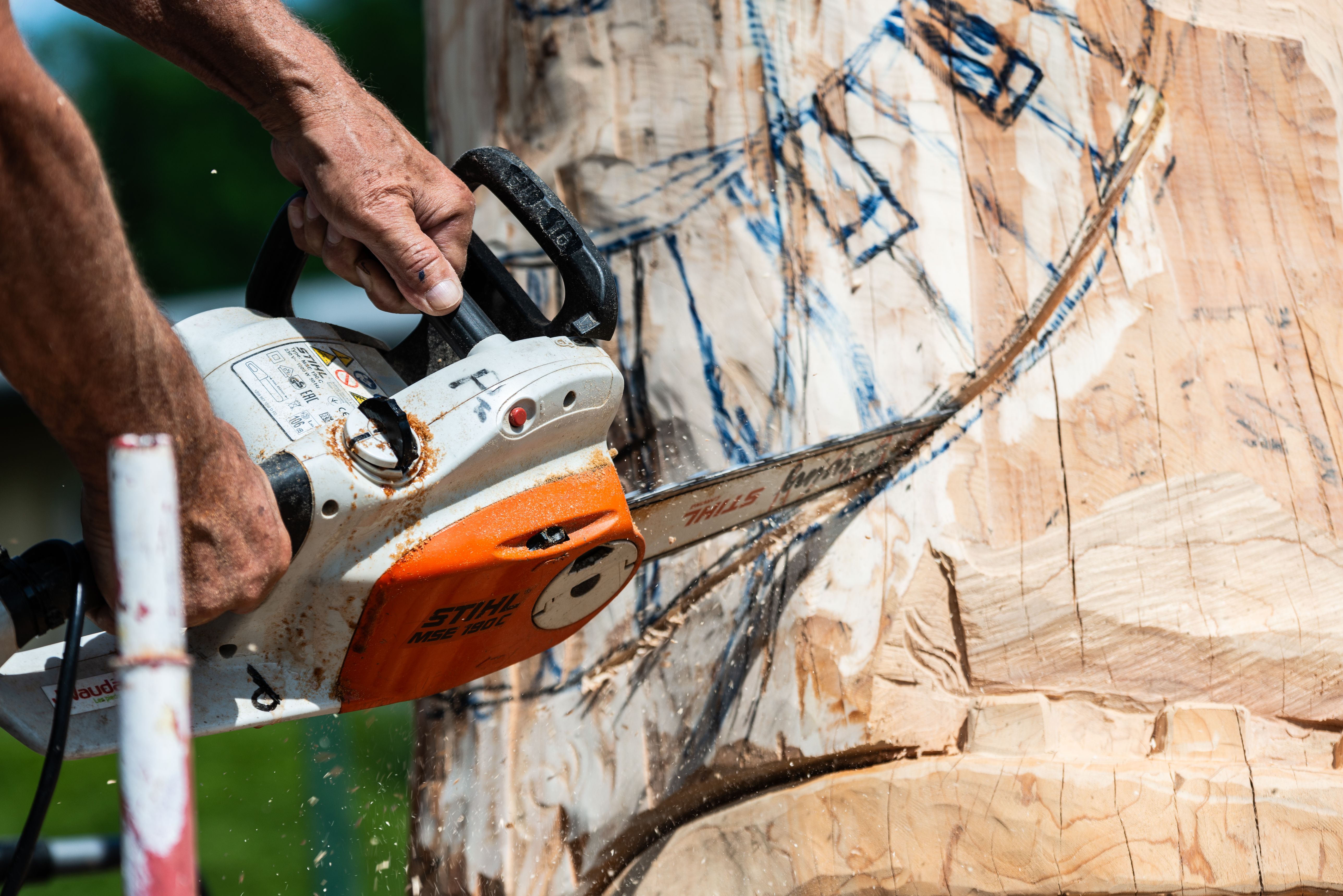
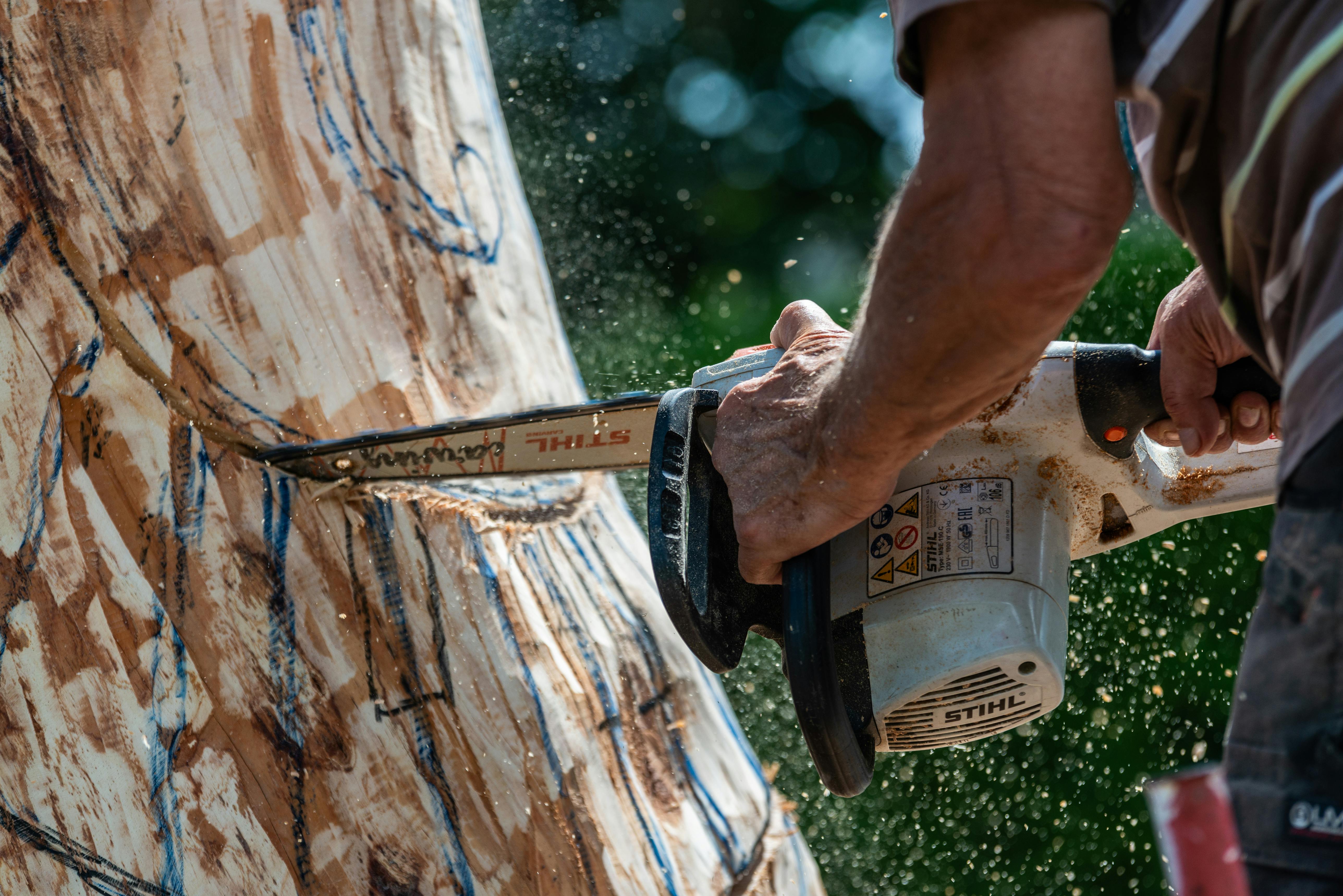
A smaller bar (16-inch) and a finer-tooth chain establish the planes of the face, the chest, the legs. The 12-inch carving bar gets into the eye hollows, the mouth, and the feather lines. Detail work is hand-eye coordination under load; the chainsaw does the work, the carver decides the cuts.
Stage five — sanding and sealing
A 50-grit pass, a 100-grit pass, a 220-grit pass, and a coat of exterior oil to slow the gray. Chain-carved outdoor work is sold unfinished or with one coat of oil; the patina is part of the form.
Stage six — hand carving and finishing
For basswood and cherry hand carving, the stages are similar but slower. Gouges and chisels replace the chainsaw; the carver pulls long shavings rather than letting the saw make the chips. A finished hand-carved spoon takes an afternoon; a finished basswood bear takes a week.